News CENTER
新闻中心

Brazil’s June 1, 2026 joint notice by ANVISA and INMETRO introduces mandatory dual certification for all lifting equipment powered by lithium-ion batteries, including electric hoists, stackers, and small truck-mounted cranes. For importers, equipment manufacturers, export traders, and supply-chain service providers connected to the Brazilian market, this is an immediate compliance issue because products without both certificates will be refused unloading at the Port of Santos and will not be allowed to complete certification afterward.
Event overview
According to the disclosed notice, Brazil’s National Health Surveillance Agency (ANVISA) and National Institute of Metrology, Quality and Technology (INMETRO) jointly announced on June 1, 2026 that all lithium-ion battery-powered lifting equipment imported into Brazil must now hold dual certification.
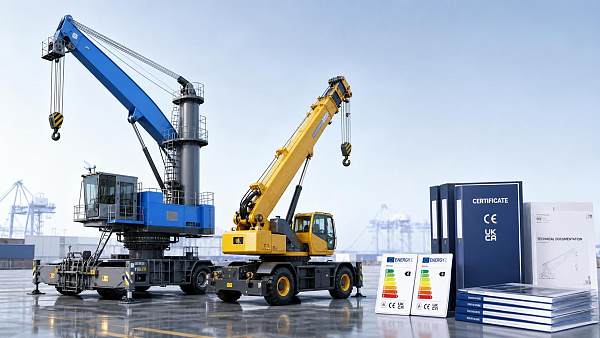
The currently confirmed scope covers equipment including electric hoists, stackers, and small truck-mounted cranes that use lithium-ion batteries as the power source. Under the division of responsibilities already made public, INMETRO is responsible for electrical safety and EMC compliance, while ANVISA adds control requirements related to battery thermal runaway risk and electrolyte leakage protection.
The notice also states a clear enforcement consequence: products lacking both certifications will be denied unloading at the Port of Santos, and post-arrival supplementary certification will not be accepted.
Which segments are affected
Import and export trading companies
These companies are directly affected because the policy is tied to import clearance and unloading eligibility. The immediate impact is not abstract compliance pressure but actual shipment interruption risk. If a product reaches Brazil without the required dual certification, the cargo may fail to enter the next operational stage.
From an operational perspective, the impact is mainly reflected in order execution, shipment scheduling, and document readiness. Analysis shows that for traders serving Brazil, certification status now becomes a pre-shipment control point rather than a follow-up customs issue.
Equipment manufacturers supplying the Brazilian market
Manufacturers of lithium-powered lifting equipment are affected because the rule targets the product category itself. Whether the company exports directly or supplies through intermediaries, the ability to enter Brazil now depends on whether the equipment can satisfy both electrical and battery-related compliance requirements named in the notice.
The main impact lies in export qualification review, technical document preparation, and coordination with downstream customers. Observably, manufacturers can no longer treat battery-related risk controls as a secondary issue if the Brazil market remains part of their shipment plan.
Battery and key component matching participants
Although the notice is aimed at finished lifting equipment, companies involved in battery integration and related protective design are also indirectly affected because ANVISA’s newly added focus includes thermal runaway risk and electrolyte leakage protection. That means the battery-related part of the product is no longer only a technical detail inside the machine but part of the market-entry threshold.
The effect is mainly reflected in technical matching, compliance communication, and supporting documentation readiness. From an industry perspective, any mismatch between equipment configuration and certification expectations could delay transaction closure or shipment release preparations.
Distributors and channel operators in the Brazilian market
Distributors are affected because certification failure at the import stage directly influences product availability, delivery commitments, and inventory continuity. Even if they are not the certificate applicant, they still face commercial consequences if upstream suppliers cannot deliver compliant products.
The impact will likely appear in model selection, supplier screening, and contract execution. Analysis shows that distributors may need to shift attention from price and delivery alone to whether both certificates are already complete before dispatch.
Logistics, port, and supply-chain service providers
Freight forwarders, customs support teams, and related supply-chain service providers are affected because the notice creates a harder compliance gate before unloading. A shipment issue under this rule is not merely a paperwork discrepancy if no post-arrival remedy is permitted.
The practical impact is concentrated in booking review, document verification, and client risk notification. Observably, service providers handling Brazil-bound machinery cargo may need to treat certification completeness as a shipment acceptance condition for relevant goods.
What companies and practitioners should focus on and how to respond now
Track official wording and avoid relying on assumptions
Companies involved in Brazil-bound shipments should closely monitor the exact official wording already issued by ANVISA and INMETRO and any follow-up clarifications. Since the current confirmed information includes product scope, responsibility split, and port enforcement consequences, businesses should avoid extending the rule by assumption to products or scenarios not yet publicly confirmed.
Check whether specific exported models fall within the disclosed scope
The practical first step is to review current and pending product models against the confirmed category: lifting equipment powered by lithium-ion batteries, including electric hoists, stackers, and small truck-mounted cranes. Current attention should be placed on whether any goods already scheduled for Brazil match this description and whether dual certification has been secured before shipment.
Move certification review to the pre-shipment stage
Because the notice states that goods without dual certification will be refused unloading and cannot complete certification afterward, certification cannot be managed as a post-arrival correction item. From an industry perspective, businesses should bring certificate verification, document consistency checks, and buyer confirmation into pre-shipment workflows.
Prepare communication and contingency plans across the supply chain
Importers, exporters, manufacturers, and logistics providers should align early on certificate status, shipment timing, and document handover responsibilities. Analysis shows that the main risk under this notice is not only regulatory non-compliance but also avoidable operational disruption caused by miscommunication between contracting parties before cargo departure.
Editor’s view / industry observation
Observably, this development is not just a technical compliance update for one certificate body. It already represents an operational import threshold for lithium-ion battery-powered lifting equipment entering Brazil because the enforcement consequence has been clearly stated and post-arrival remediation is not accepted.
Analysis shows that the significance of this notice lies in the combination of dual authority oversight and immediate port-level execution. That makes the issue more than a policy signal for future discussion; for businesses with ongoing Brazil trade, it is already a shipment decision factor.
Current attention should be on how consistently the rule is applied across real transactions and whether any additional official clarification further defines covered products or documentation expectations. More suitably understood, this is both a compliance requirement and a supply-chain screening mechanism for affected equipment categories.
Conclusion
The June 1 joint move by ANVISA and INMETRO changes the import conditions for lithium-ion battery-powered lifting equipment in Brazil from single-dimension compliance to dual-certification access control. For manufacturers, traders, distributors, and logistics participants, the immediate industry meaning lies in shipment eligibility, not only regulatory formality.
Observably, the most rational reading at this stage is that this is already a landed business requirement for affected products rather than a distant policy signal. Companies tied to the Brazil market should therefore focus on scope confirmation, certificate readiness, and pre-shipment coordination.
Source note
Main sources: joint notice information disclosed by ANVISA and INMETRO; event summary provided for publication.
Items requiring continued observation: any subsequent official clarification on detailed product scope, documentation practice, and implementation wording beyond the currently confirmed notice content.