News CENTER
新闻中心

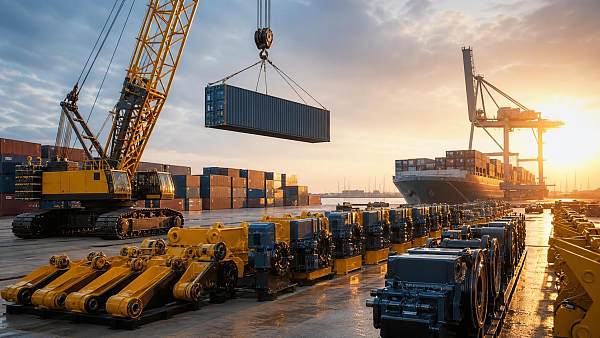
On May 30, 2026, Shanghai Customs and Yangshan Port Group jointly launched China’s first intelligent pre-inspection channel for crane exports — a regulatory innovation leveraging AI-driven document recognition, remote video verification, and standardized component database matching. The initiative significantly accelerates customs clearance for key export categories including complete cranes, grabs, and electrical control cabinets, directly impacting global supply chain reliability in heavy equipment trade.
Launch of China’s First Intelligent Pre-Inspection Channel for Crane Exports
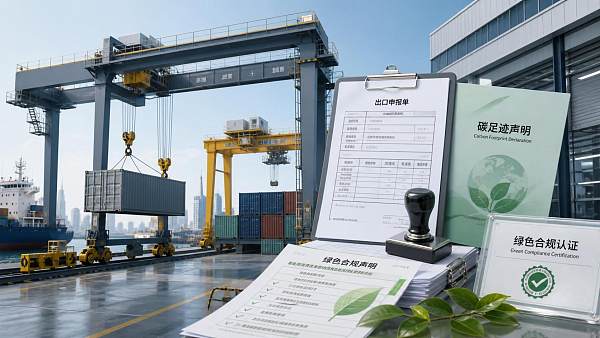
Effective May 30, 2026, the intelligent pre-inspection channel for crane exports became operational at Shanghai Yangshan Port. Developed collaboratively by Shanghai Customs and Yangshan Port Group, the system enables ‘immediate declaration, immediate inspection, immediate release’ for high-frequency crane-related export items — specifically whole units, grabs, and electrical control cabinets. It integrates AI-based document recognition, real-time remote video cargo inspection, and automated comparison against a standardized parts database. Pilot enterprises reported an average customs clearance time reduction from 42 hours to 3.2 hours, with marked improvements in export stability and delivery certainty.
Impact Across Supply Chain Roles
Export-oriented trading enterprises
These entities benefit most directly from shortened clearance cycles, as reduced dwell time at port lowers demurrage costs and improves on-time shipment performance. They must now align documentation formats and digital submission protocols with the AI recognition engine’s requirements — particularly for technical specifications and conformity declarations tied to standard components.
Raw material and component procurement firms
With faster port release, demand responsiveness increases, but so does pressure for just-in-time upstream delivery. Procurement teams need to ensure traceability and certification consistency for subassemblies (e.g., motors, PLCs, structural weldments) that feed into pre-verified standard-item databases used by the inspection system.
Equipment manufacturing companies
Manufacturers exporting cranes or modular subsystems face tighter integration between production scheduling and customs readiness. Pre-inspection eligibility depends on adherence to standardized configurations — meaning design flexibility may be constrained where non-standardized parts are used without prior validation.
Logistics and compliance service providers
Third-party customs brokers and technical documentation specialists must upgrade capabilities in AI-compatible data structuring, remote verification support, and database-aligned technical file preparation. Their role shifts from reactive clearance facilitation toward proactive pre-submission validation.
Key Operational Adjustments for Exporters
Align technical documentation with AI-readable standards
Commercial invoices, packing lists, and technical specifications must follow structured templates compatible with AI document parsing — especially for part numbers, HS codes, and conformity statements referencing IEC, ISO, or GB standards.
Prepare for remote video verification workflows
Exporters should establish secure, well-lit staging areas for remote cargo inspection, ensuring visibility of serial plates, safety labels, wiring diagrams, and critical interfaces — all required for real-time verification during pre-inspection.
Validate standard-component compliance in advance
Since the system cross-checks against a national standard-part database, manufacturers must confirm whether key subcomponents (e.g., frequency inverters, limit switches, grab hydraulics) are registered and certified under recognized frameworks before shipment planning.
Reassess delivery lead times and contractual commitments
A 3.2-hour clearance window enables tighter delivery windows in international contracts. Exporters should revise internal logistics SLAs and update force majeure clauses to reflect new baseline transit predictability — while remaining vigilant about non-port bottlenecks (e.g., inland transport, origin certification).
Industry Perspective: Beyond Speed — A Shift Toward Predictable Compliance
Analysis shows this initiative reflects a broader evolution from event-based inspection to continuous, data-anchored compliance assurance. From an industry perspective, it signals growing reliance on machine-verifiable technical attributes — not just paper-based certifications — as a precondition for market access. What deserves closer attention is how such systems may gradually raise the bar for documentation maturity across SME exporters, potentially widening the operational gap between digitally equipped manufacturers and those reliant on manual processes. Observably, the emphasis on standardized components also incentivizes modular design and harmonized technical specifications across OEMs and Tier-1 suppliers — a subtle but meaningful driver of interoperability and after-sales service standardization.
Strategic Implication for Global Equipment Trade
This milestone does not merely shorten clearance time — it redefines reliability in capital equipment exports. By anchoring inspection to verifiable digital records and standardized hardware, the channel reduces subjective interpretation in customs enforcement and strengthens contractual enforceability for buyers. However, its long-term value hinges on scalability beyond pilot scope, consistent application across ports, and transparent updates to the underlying standard-part database. Rational assessment suggests it represents a foundational step toward systemic trade facilitation — not a standalone efficiency gain.
Source Attribution and Monitoring Guidance
This article was generated exclusively from the provided title, event date (May 30, 2026), and summary. Specific official source links were not provided in the input and should be verified continuously. Stakeholders are advised to monitor forthcoming implementation guidelines from Shanghai Customs, updates to the national standard-component database, revisions to Yangshan Port’s digital submission platform, and early feedback from pilot enterprises regarding documentation acceptance criteria and remote verification protocols.