News CENTER
新闻中心

Shanghai Customs announced on May 28 the launch of China’s first intelligent pre-inspection channel for exported cranes at Yangshan Special Comprehensive Bonded Zone. The exact event date was not specified, but implementation began immediately following the announcement. This regulatory innovation directly impacts manufacturers and exporters of lifting equipment by streamlining customs clearance through automated technical verification—reducing average processing time to 3.2 hours and alleviating delivery pressure during peak export seasons.
Launch of Nation’s First Intelligent Pre-Inspection Channel for Crane Exports
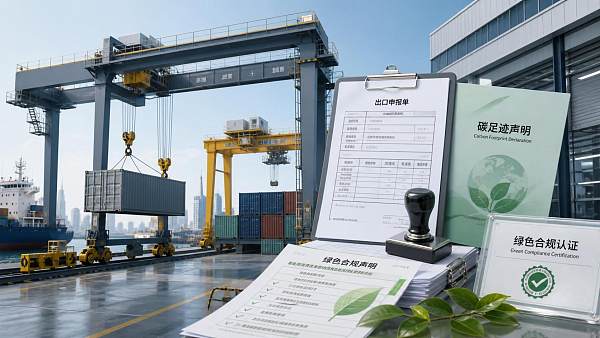
Effective immediately after Shanghai Customs’ May 28 notification, the Yangshan Special Comprehensive Bonded Zone has activated the country’s inaugural ‘crane export intelligent pre-inspection channel’. The system integrates AI-powered image recognition with real-time IoT sensor data to automatically verify key compliance documents—including structural component certifications, torque limiter validation reports, and wire rope test reports. Upon electronic submission, export enterprises complete the full regulatory workflow in 3.2 hours—a 40% improvement over conventional clearance procedures.
Impacts Across the Lifting Equipment Supply Chain
Export-oriented manufacturing enterprises
These companies face immediate operational implications, as the new channel requires digital readiness for technical documentation submission. Impact centers on pre-shipment compliance preparation, document formatting consistency, and alignment with AI-validated data fields—particularly for structural integrity and safety-critical components.
Raw material and component suppliers
Suppliers must ensure traceability and certification compatibility with downstream automated verification. Documentation for steel forgings, load-sensing elements, or high-tensile wire ropes now needs machine-readable formats and standardized metadata to support seamless integration into the pre-inspection pipeline.
Contract manufacturers and OEMs
Manufacturers integrating third-party subsystems—such as control units or hoisting mechanisms—must coordinate technical reporting across vendors. Any mismatch in test report scope, calibration records, or version-controlled schematics may trigger manual review, negating time savings.
Logistics and trade compliance service providers
Freight forwarders and customs brokers must upgrade internal systems to handle structured digital submissions and interpret AI-generated verification feedback. Their role shifts toward technical documentation orchestration—not just filing—requiring deeper familiarity with crane-specific safety standards and test protocols.
Key Compliance Priorities for Exporters
Standardized technical documentation for AI validation
Reports on structural components, torque limiters, and wire ropes must follow prescribed templates and metadata tagging. Non-standard PDFs or unstructured scans will not be processed automatically and may revert to manual inspection.
IoT sensor data interoperability
For cranes equipped with embedded monitoring systems, real-time sensor output (e.g., load history, cycle counts, overload events) must be accessible via certified API endpoints compatible with the customs platform.
Pre-submission verification of certification validity
All referenced test reports must be issued by accredited laboratories and remain within their stated validity period. Expired or non-accredited reports will cause automatic rejection without human intervention.
Alignment of delivery scheduling with digital clearance windows
While average clearance is 3.2 hours, enterprises should factor in potential latency from data reconciliation or system maintenance. Critical shipments require buffer time—even under optimized conditions—to avoid port congestion or demurrage.
Analysis: A Shift Toward Automated Technical Compliance
Analysis shows this initiative reflects a broader trend where customs authorities increasingly treat technical conformity—not just tariff classification or origin—as a core dimension of trade facilitation. It is more appropriate to understand this as a de facto extension of product certification requirements into the clearance process itself. What deserves closer attention is how such automation raises the bar for documentation discipline: minor inconsistencies in test report nomenclature or unit formatting could delay clearance more severely than traditional paperwork errors. From an industry perspective, this signals growing convergence between quality assurance systems, digital traceability infrastructure, and regulatory enforcement—making upstream standardization a strategic imperative, not just a compliance checkbox.
Strategic Implications for the Lifting Equipment Sector
This development marks a meaningful step toward digitized, risk-based regulatory oversight for capital goods exports. Rather than representing a one-off efficiency gain, it establishes a precedent for AI-assisted verification of complex technical parameters—potentially expanding to other heavy machinery categories. Its long-term significance lies less in time savings alone and more in reinforcing that regulatory readiness now hinges on structured, interoperable, and auditable technical data—not merely completed forms.
Source Attribution and Monitoring Guidance
This article was generated based solely on the provided title, unspecified event date, and summary issued by Shanghai Customs on May 28. Specific official source links were not provided in the input and should be verified continuously. Stakeholders are advised to monitor forthcoming implementation guidelines, clarification on acceptable file formats and metadata schemas, updates to laboratory accreditation requirements, and early field feedback from pilot exporters—all of which will shape practical adoption and compliance strategy.