News CENTER
新闻中心

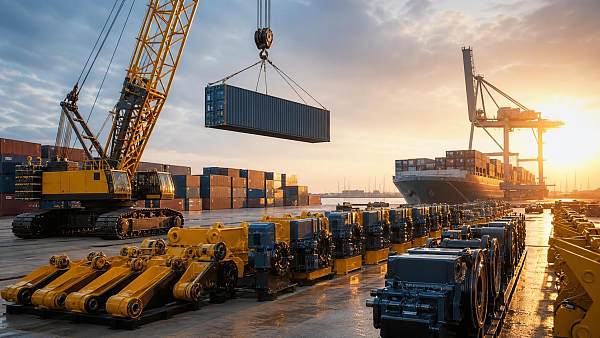
On May 26, 2026, Shanghai Customs and Shanghai International Port Group jointly launched the ‘Smart Inspection System for Lifting Equipment Exports’ at Yangshan Deep-Water Port. This regulatory upgrade targets large-scale equipment—including bridge and gantry cranes—and directly impacts global export logistics, customs compliance, and supply chain responsiveness in the heavy machinery sector.
Platform Deployment and Verified Operational Impact
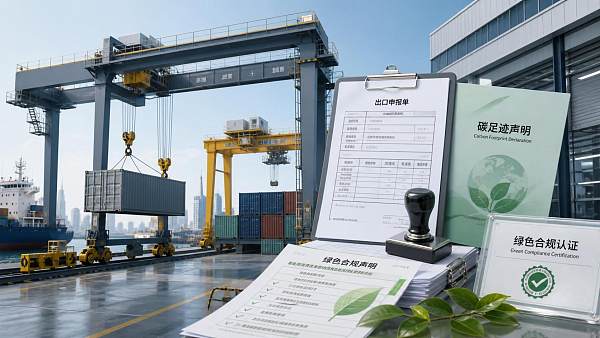
On May 26, 2026, the ‘Smart Inspection System for Lifting Equipment Exports’ went live at Yangshan Deep-Water Port. The system applies 3D scanning pre-clearance, AI-powered weld seam comparison, and automated export license verification for bridge and gantry cranes. Pilot enterprises reported an average customs clearance time reduction—from 72 hours to 43 hours—and a 65% drop in inspection rejection rates. Nationwide rollout across major Chinese ports is scheduled to begin in June 2026.
Implications Across the Supply Chain Ecosystem
Export-oriented manufacturing enterprises
These companies face revised pre-shipment compliance requirements. The AI-assisted structural weld verification means fabrication documentation—especially welding procedure specifications (WPS), welder qualification records, and non-destructive testing reports—must now align precisely with physical as-built geometry. Discrepancies previously tolerated during manual review are now flagged automatically.
Raw material and component suppliers
Suppliers of structural steel, lifting mechanisms, and control systems must ensure traceability documentation (e.g., mill test reports, CE/ISO certifications) is digitally accessible and machine-readable. The platform’s integration with customs data systems increases demand for standardized digital product passports.
Contract manufacturers and OEMs
Manufacturers engaged in turnkey crane exports must adapt assembly workflows to accommodate real-time dimensional validation. Pre-shipment 3D scanning readiness—including calibrated coordinate measurement and surface finish consistency—has become a de facto prerequisite for port acceptance.
Logistics and customs brokerage service providers
Third-party service providers must upgrade their digital interfaces to support structured data submission (e.g., XML-based license metadata, weld map coordinates). Manual document handling is increasingly incompatible with the system’s automated verification logic.
Key Compliance Priorities for Exporters
Pre-submission technical documentation alignment
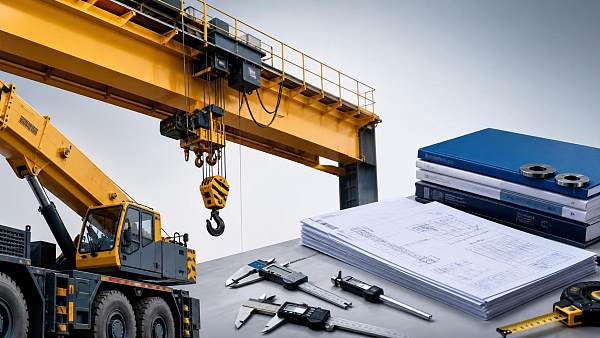
Ensure that design drawings, structural analysis reports, and weld maps reflect actual as-built configurations—not just nominal specifications. AI weld comparison relies on geometric fidelity; deviations beyond tolerance thresholds trigger automatic rejections.
Export license data integrity and timeliness
Licenses must be submitted in machine-processable formats prior to container arrival. The system performs real-time cross-checking against national export control lists—delays or formatting errors in license data cause immediate workflow suspension.
Pre-scan preparation and dimensional validation
Crane assemblies must undergo certified 3D scanning before port entry. Surface accessibility, reflective coating uniformity, and reference point visibility directly affect scan success rate—factors previously outside standard QA scope.
Supplier qualification and traceability protocols
Sub-tier suppliers of critical components (e.g., hoist motors, PLC controllers, structural bolts) must provide auditable digital certificates. The platform’s traceability layer extends upstream, increasing scrutiny on procurement documentation chains.
Industry Observation: Beyond Efficiency Gains
Analysis shows this initiative signals a broader shift from document-centric to evidence-centric export regulation. What deserves closer attention is not only the 40% clearance acceleration—but how the system institutionalizes geometric and metallurgical verifiability as new baseline compliance criteria. From an industry perspective, this raises the threshold for export readiness: manufacturers can no longer rely solely on paper-based conformity statements. Instead, physical-digital twin alignment—verified via scanning and AI—is becoming a mandatory operational capability. Observably, this accelerates convergence between quality assurance, digital engineering, and trade compliance functions within exporting organizations.
Strategic Takeaway for Stakeholders
This deployment marks a structural evolution—not merely a procedural update—in China’s export control infrastructure. It reflects growing integration of industrial metrology, AI-driven inspection, and regulatory automation. For stakeholders, the implication is clear: competitive advantage will increasingly depend on embedded digital verification capabilities—not just adherence to static standards. A measured, phased adaptation—focused first on documentation digitization, then on pre-scan process controls, and finally on supplier data interoperability—is more appropriate than reactive compliance retrofitting.
Source Attribution and Monitoring Guidance
This article was generated exclusively from the provided title, event date (May 26, 2026), and summary. Specific official source links were not provided in the input and should be verified continuously. Stakeholders are advised to monitor upcoming implementation guidelines from Shanghai Customs and the General Administration of Customs of China, particularly regarding technical specifications for 3D scanning, acceptable AI validation thresholds, and formal definitions of ‘structural weld equivalence’ under the new framework. Industry feedback on pilot-phase operational challenges is also expected to shape final nationwide enforcement parameters.