News CENTER
新闻中心

Saudi Arabia’s infrastructure acceleration has triggered new procurement activity, with ACWA Power—the kingdom’s largest infrastructure investor—signing a contract on May 27, 2026, to procure 37 intelligent tower cranes (QTZ1250 and above) from three Chinese manufacturers, including Nantong Kelait. This development reflects tightening project delivery timelines and evolving equipment compliance expectations across major Saudi megaprojects.
Confirmed Procurement for Seven EPC Projects
According to Al-Iqtisadiah (The Economic Newspaper), published on May 28, 2026, ACWA Power confirmed it will acquire 37 QTZ1250-class or larger intelligent tower cranes from three Chinese crane manufacturers—including Nantong Kelait—in phased deliveries. The equipment is designated for seven engineering, procurement, and construction (EPC) projects, notably the Red Sea City Phase II and the NEOM Solar Park. The first purchase order was signed on May 27, 2026, and full delivery and on-site commissioning are required by Q3 2026.
Impact Across Supply Chain Roles
Direct Exporters
Manufacturers exporting QTZ1250+ tower cranes must now align with ACWA Power’s technical specifications, delivery schedule, and commissioning protocols. The compressed timeline—requiring full deployment by Q3 2026—intensifies pressure on export documentation, customs clearance, and logistics coordination.
Raw Material and Component Suppliers
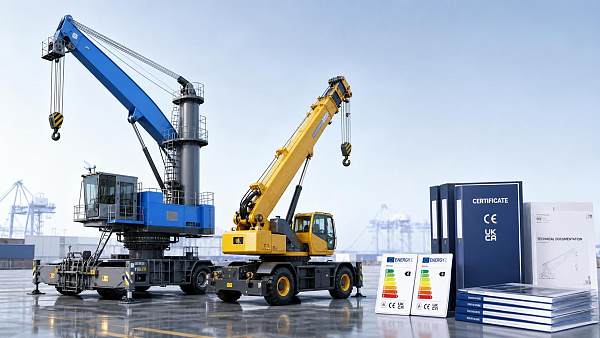
Suppliers of high-strength steel, intelligent control systems, and safety-critical subsystems face accelerated demand signals. Production planning must account for traceability requirements and certification validity (e.g., CE marking, ISO 9001, and Saudi Standards, Metrology and Quality Organization [SASO] conformity where applicable).
Equipment Manufacturers
Manufacturers must verify that their QTZ1250+ models meet structural integrity, wind-load resistance, and remote monitoring capabilities specified for desert operating conditions. Pre-shipment third-party verification—especially for load testing and software cybersecurity features—is likely to become mandatory under ACWA Power’s updated procurement framework.
Supply Chain Service Providers
Logistics firms, technical commissioning partners, and after-sales service networks must prepare for rapid mobilization in Saudi Arabia. Local representation, bilingual technical support capacity, and spare parts warehousing in Jeddah or NEOM-linked zones may shift from optional to prerequisite status.
Key Operational Priorities for Suppliers
Compliance Validation Against Project-Specific Technical Specifications
ACWA Power’s EPC contracts increasingly embed performance-based clauses—not just model numbers. Suppliers must cross-check crane lifting charts, anti-collision system interoperability, and real-time telemetry compatibility against each project’s digital twin platform before bid submission.
Accelerated Delivery and Commissioning Planning
With Q3 2026 as the hard deadline, manufacturers must lock down component lead times, pre-clear export licenses, and coordinate staging at Saudi ports. On-site commissioning—including operator training and integration with site-wide IoT systems—must be scheduled concurrently with physical delivery.
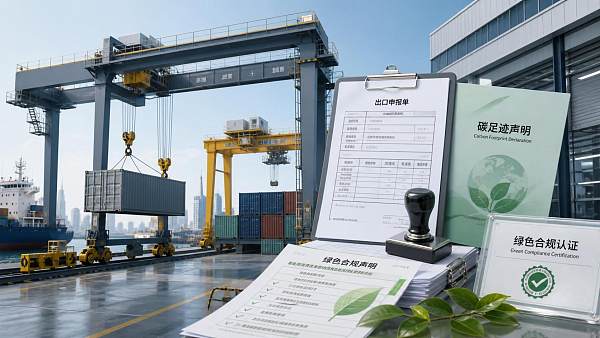
Documentation Readiness for SASO and GCC Conformity Assessment
Although not explicitly stated in the announcement, recent ACWA Power tenders require GCC Standardization Organization (GSO) certification and SASO Product Safety Mark for heavy construction equipment. Suppliers should proactively validate test reports against GSO IEC 61000-6-4 (EMC) and GSO ISO 12100 (machine safety) requirements.
Strategic Implications for Global Crane Suppliers
Analysis shows this procurement signals a broader shift: ACWA Power is consolidating equipment sourcing around fewer, technically vetted suppliers capable of end-to-end delivery—not just manufacturing. Observably, the emphasis on ‘intelligent’ cranes suggests rising thresholds for embedded diagnostics, cybersecurity resilience, and cloud-based maintenance logging. It is more appropriate to understand this as an implicit upgrade of technical qualification requirements, rather than merely a volume-driven order. What deserves closer attention is how such mandates may cascade into future tenders across the Gulf Cooperation Council (GCC), especially as NEOM and Red Sea Authority enforce unified digital construction standards.
Broader Industry Significance
This order underscores the growing influence of project-specific technical governance over traditional price-led procurement in Middle Eastern infrastructure. For global crane manufacturers, it marks a transition from product compliance to integrated solution readiness—where hardware, software, service, and regulatory alignment must converge within tight windows. Success hinges less on scale alone and more on demonstrable execution discipline across cross-border supply chains.
Source Attribution and Monitoring Guidance
This article synthesizes only the information provided in the input: title, event date (May 27, 2026), and summary sourced from Al-Iqtisadiah. Specific official source links were not provided in the input and should be verified continuously. Stakeholders are advised to monitor upcoming updates to ACWA Power’s Supplier Code of Conduct, SASO’s draft regulations on smart construction equipment (expected Q3 2026), and tender amendments for NEOM Solar Park Package 4 and Red Sea City Phase II civil works.