News CENTER
新闻中心

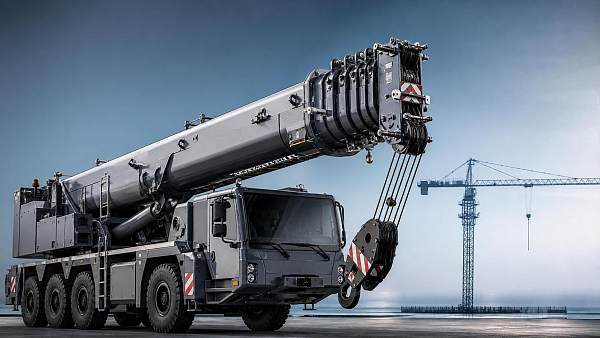
Effective June 15, 2026, Indonesia will enforce mandatory green energy efficiency certification for all imported cranes under SNI 7018:2026 — a regulatory shift with immediate implications for manufacturers, exporters, and logistics service providers engaged in the Indonesian heavy equipment market.
Factual Implementation Timeline and Requirements
The Indonesian National Standardization Agency (BSN), through its BPN Certification Center, has confirmed that as of June 15, 2026, all cranes imported into Indonesia must obtain the ‘Green Energy Efficiency Certification’ (SNI 7018:2026). This certification mandates compliance with three technical performance criteria: no-load energy consumption, brake thermal fade resistance, and regenerative braking efficiency. Chinese third-party testing institutions currently report full booking calendars, with leading laboratories scheduling certification tests only from mid-August 2026 onward. Equipment lacking valid certification will be denied customs clearance and may incur penalties up to 20% of the declared cargo value.
Impact Across Supply Chain Roles
Export-oriented trading enterprises
These firms face direct customs clearance risk if shipments arrive post–June 15 without valid BPN certification. Documentation gaps or unverified test reports may trigger detention, re-export orders, or financial penalties — affecting cash flow and contractual delivery commitments.
Raw material and component procurement specialists
Suppliers of critical subsystems — such as variable-frequency drives, regenerative braking modules, or high-efficiency motors — must now align technical specifications with SNI 7018:2026 verification protocols. Procurement contracts may require updated compliance clauses and traceable test evidence.
Equipment manufacturing enterprises
Manufacturers must integrate SNI 7018:2026 verification early in product design and validation cycles. Retrofitting non-compliant models after production is not feasible under current certification rules; pre-certification testing is therefore a prerequisite for new model launches targeting Indonesia.
Supply chain and compliance support service providers
Logistics coordinators, customs brokers, and conformity assessment consultants must update their service offerings to include BPN-specific documentation review, test schedule coordination, and real-time tracking of certification status — especially given the extended lead times observed across Chinese labs.
Key Priorities and Practical Response Measures
Accelerate certification planning ahead of the June deadline
Given current lab backlogs extending into August, companies should submit application dossiers and preliminary test samples to accredited bodies immediately — even if final product builds are still underway. Early engagement helps secure priority slots and allows time for iterative technical adjustments.
Verify test scope alignment with SNI 7018:2026’s three core metrics
Not all existing energy efficiency or safety reports satisfy BPN requirements. Testing must explicitly cover no-load power draw under standardized operating conditions, brake thermal stability after repeated cycles, and quantified regenerative energy recovery rates — all measured per defined test procedures in SNI 7018:2026.
Review and revise export documentation workflows
Customs declarations, commercial invoices, and packing lists must reference the BPN certificate number and issue date. Supporting technical files — including test reports, calibration records, and configuration control documents — must be compiled in Indonesian or English, with clear traceability to certified configurations.
Assess supplier capability for certified subassemblies
Manufacturers relying on outsourced components (e.g., braking systems or inverters) must confirm whether those suppliers hold BPN-recognized test reports or have initiated parallel certification — avoiding last-minute integration delays or non-conforming batches.
Industry Observation: A Shift Toward Performance-Based Market Access
Analysis shows this requirement reflects a broader trend in ASEAN markets: moving beyond basic safety compliance toward verifiable operational performance metrics. What deserves closer attention is how SNI 7018:2026’s focus on energy use and thermal resilience may accelerate adoption of digital twin-based validation and predictive maintenance-ready designs among exporting manufacturers. Observably, the 75-day gap between policy announcement and enforcement — coupled with constrained testing capacity — signals that regulatory readiness timelines now critically depend on infrastructure scalability, not just technical capability.
Strategic Implication for Global Crane Suppliers
This regulation marks more than a procedural hurdle — it institutionalizes energy efficiency and thermal reliability as non-negotiable market access criteria in Indonesia. For international suppliers, success hinges less on generic compliance and more on integrated engineering-to-certification execution: aligning R&D, procurement, quality assurance, and export operations around a single, time-bound verification pathway. The absence of transitional allowances or phased rollout further underscores the need for proactive, cross-functional preparation.
Source Attribution and Verification Guidance
This article is generated exclusively from the provided title, event date (2026-06-15), and factual summary. Specific official source links were not provided in the input and should be verified continuously. Stakeholders are advised to monitor updates from BSN and BPN Certification Center regarding implementation guidelines, interpretation of test parameters, certification fee structures, and acceptance of foreign-accredited laboratory reports. Ongoing observation of tender specifications issued by Indonesian state-owned enterprises and infrastructure developers is also recommended, as these may incorporate additional technical or documentation stipulations aligned with SNI 7018:2026.