News CENTER
新闻中心

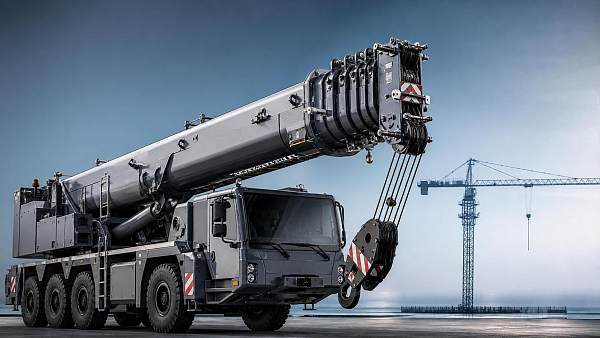
The European Commission has formally adopted definitive anti-dumping measures against bridge, gantry, and mobile cranes originating in China, effective 1 June 2026 — marking a significant shift in trade conditions for lifting equipment exporters and EU importers alike.
Final Anti-Dumping Determination Published
On 31 May 2026, the European Commission issued its final anti-dumping regulation concerning certain Chinese-origin cranes, including bridge-type, gantry-type, and mobile cranes. The measure imposes a definitive duty of 32.7% on imports falling under HS codes 8426.19 and 8426.91. The duty applies for a five-year period starting 1 June 2026. The regulation directly affects customs clearance costs, procurement budgets, and local distribution pricing for EU-based importers.
Impact Across the Supply Chain
Export-Oriented Manufacturing Enterprises
Manufacturers such as Nantong Kelaitel must adapt immediately to new tariff-driven cost structures. The duty directly influences FOB and CIF quotation models, requiring recalibration of export pricing, margin assumptions, and contract terms with EU buyers.
Import and Distribution Companies
EU-based importers face higher landed costs, affecting inventory planning, working capital requirements, and competitive positioning against non-subject suppliers. Customs declarations now require updated origin documentation and tariff classification verification.
Supply Chain Service Providers
Freight forwarders, customs brokers, and compliance consultants must update tariff databases, revise advisory protocols for crane-related shipments, and support clients in verifying product scope coverage (e.g., whether specific configurations fall within HS 8426.19 or 8426.91).
Procurement and Sourcing Units
Corporate procurement departments sourcing cranes for infrastructure or industrial projects must reassess budget allocations, lead times, and supplier diversification strategies — particularly where Chinese-sourced equipment previously offered cost advantages.
Key Compliance and Strategic Actions for Exporters
Immediate Documentation Updates
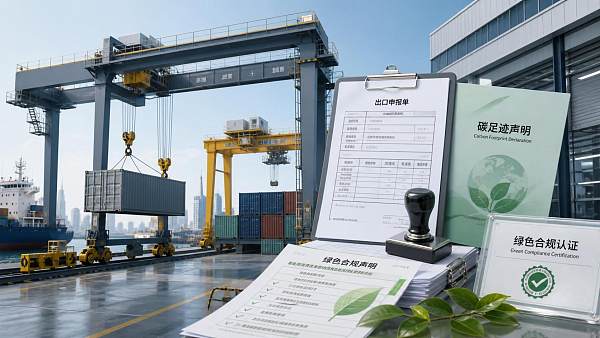
Exporters must revise origin certificates, commercial invoices, and packing lists to reflect the new duty regime. Internal compliance teams should verify alignment with EU customs guidance on product classification and origin tracing.
Revised Export Pricing Frameworks
FOB and CIF quotations must incorporate the 32.7% duty as a pass-through or absorbed cost element — with clear contractual clauses specifying responsibility for anti-dumping liability and potential retroactive adjustments.
Evaluation of Alternative Market Access Routes
Firms should assess feasibility of transshipment via third countries (subject to origin rules), local assembly in EU-based facilities, or joint ventures with EU partners to mitigate tariff exposure — while ensuring full compliance with EU rules of origin and customs valuation principles.
Industry Perspective: Beyond Tariff Headlines
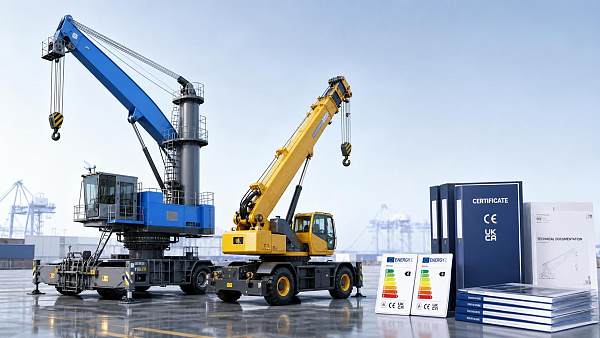
Analysis shows this measure reflects a broader tightening of trade defence instruments targeting capital goods with strategic industrial relevance. What deserves closer attention is not only the immediate cost impact, but also how it accelerates demand for localized technical support, extended warranty frameworks, and EU-compliant after-sales service networks — capabilities that go beyond traditional export compliance. Observably, manufacturers investing early in CE-marking integration, EU-based spare parts logistics, and multilingual technical documentation are better positioned to retain market access despite tariff headwinds.
Strategic Implications for Global Lifting Equipment Trade
This ruling underscores the growing complexity of exporting heavy machinery into regulated markets — where trade policy increasingly intersects with technical standardisation, supply chain transparency, and regional value-added requirements. It is more appropriate to understand this as a catalyst for structural adaptation rather than a temporary barrier: firms that treat compliance as an integrated function — spanning customs, engineering, procurement, and customer service — will sustain competitiveness over the five-year duty period and beyond.
Source Attribution and Monitoring Guidance
This article is generated exclusively from the user-provided title, event date (2026-06-01), and summary. Specific official source links were not provided in the input and should be verified continuously. Stakeholders are advised to monitor updates from the European Commission’s Directorate-General for Trade, EU Official Journal publications, national customs authorities’ implementation notices, and evolving tender specifications in public infrastructure procurement across EU member states.